

Internal Procedures
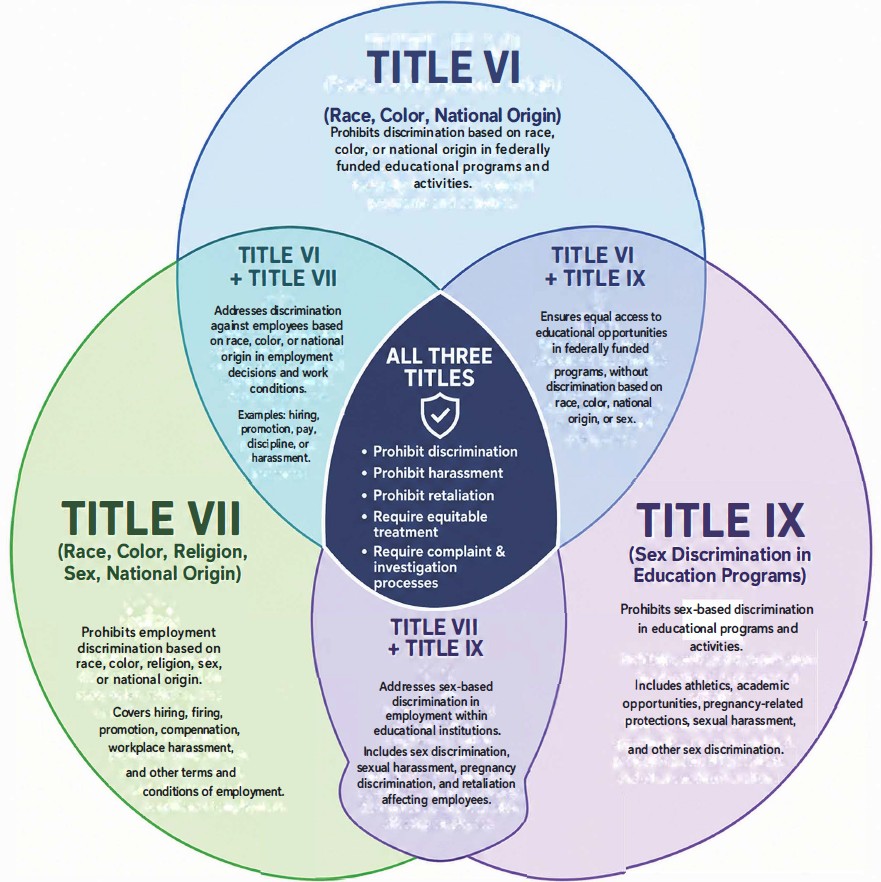
Textual Represenation of the above Venn Diagram
- Title VI (Race, Color, National Origin): Prohibits discrimination in federally funded educational programs and activities.
- Title IX (Sex Discrimination in Education): Prohibits sex-based discrimination in education, including athletics, academics, pregnancy, and sexual harassment.
- Title VII (Employment Discrimination): Prohibits discrimination based on race, color, religion, sex, or national origin regarding hiring, firing, pay, and workplace harassment.
- Overlap: Title VI & Title IX: Ensures equal access to educational opportunities without discrimination based on race, color, national origin, or sex.
- Overlap: Title VII & Title IX: Addresses sex-based discrimination for employees within educational institutions, including pregnancy discrimination and retaliation.
- Overlap: Title VI & Title VII: Protects employees from discrimination based on race, color, or national origin in employment decisions like pay and promotions.
- The Center (All Three): All three laws share core requirements: prohibiting discrimination, harassment, and retaliation; requiring equitable treatment; and mandating formal complaint and investigation processes.
Sexual Harassment Policies
In the Spring of 1980, the Equal Employment Opportunity Commission (EEOC) amended its guidelines on discrimination on the basis of sex to clarify its position on the issue of sexual harassment in employment and to reaffirm that sexual harassment is an unlawful employment practice under Title VII or the Civil Rights Act of 1964, as amended. The interim guidelines which were published in the Federal Register on April 11, 1980, are currently in effect.
Previous court rulings support EEOC's position that sex-related intimidation is sex-based discrimination. The commission has long contended that sexual harassment, like racial, religious, or ethnic intimidation, in employment creates a psychologically harmful atmosphere that interferes with work performance, and that employers have an affirmative duty to ensure that the workplace is free of discrimination in any form. The Commission continues to be widespread. It is now being treated with increasing seriousness by the courts, government agencies and academic institutions nationwide.
The newly promulgated amendment, revised to afford protection to female and male employees alike against unfair abuse of sexual privacy, specifies that harassment on the basis of sex is a violation of Federal law. It defines such behavior, either physical or verbal in nature, as: Unwelcome sexual advances, requests for sexual favors and other verbal or physical conduct of a sexual nature . . . when
- submission to such conduct is made whether explicitly or implicitly a term or condition of an individual's employment,
- submission or rejection of such conduct by an individual is used as the basis for employment decisions affecting such individual, or
- such conduct has the purpose or effect of substantially interfering with individual's work performance or creating an intimidating, hostile, or offensive working environment.
The guidelines are based on Title VII and apply to sexual harassment in the workplace. Consistent with Monroe Community College's policy to ensure fair treatment to all individuals, protection for students at Monroe Community College is covered as well. Both employees and students alleging harassment may use the Grievance Procedure.
| Jurisdiction | Title VI | Title IX | Title VII |
|---|---|---|---|
| Education Programs | Yes | Yes | No |
| Employment | No | Yes (limited) | Yes |
| Protected Classes | Race, Color, Nat'l Origin | Sex | Race, Color, Religion, Sex, Nat'l Origin |
| Core Mandates (All) | Prohibit Harassment | Prohibit Retaliation | Investigation Processes |